
Stem Cell Therapy for Sports Rehabilitation
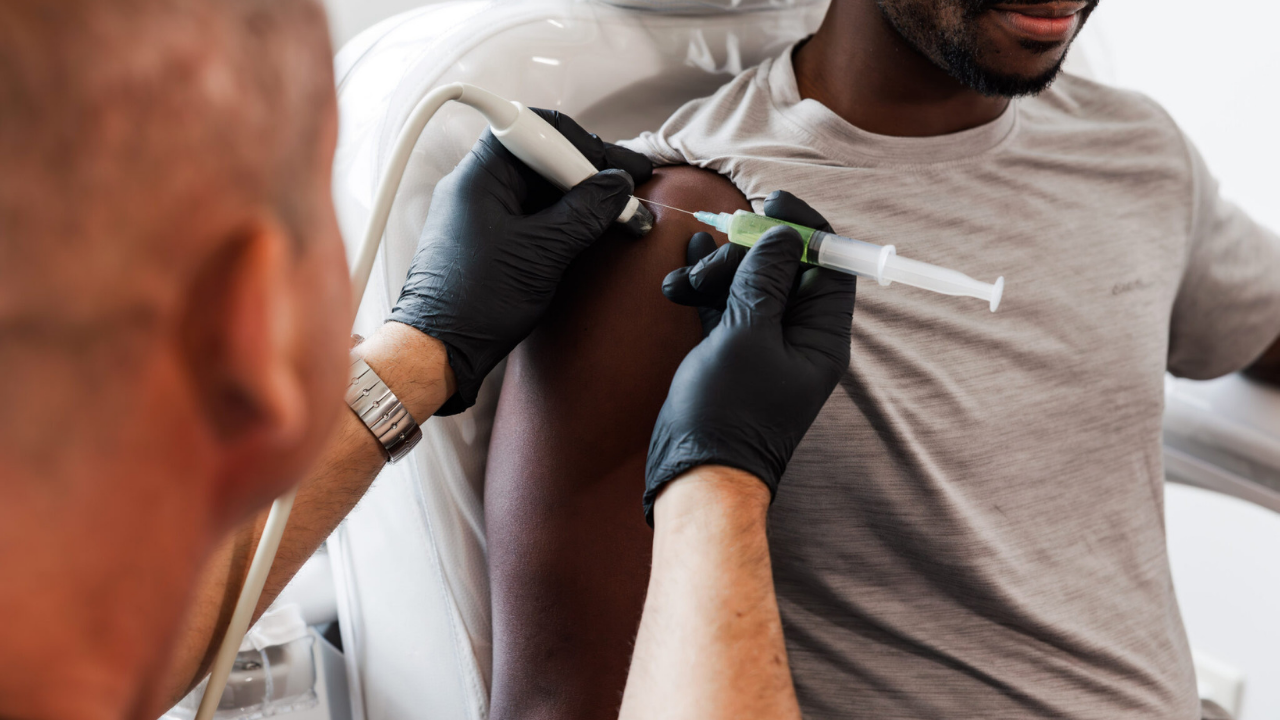
Stem cell therapy for sports rehabilitation should be viewed through the lens of recovery quality, not speed alone. Athletes and active patients often want faster healing, but biological recovery must still respect tissue load, injury severity, and functional readiness.
Cell-based therapies remain investigational for most sports-related orthopedic injuries. Their potential role is best discussed as possible biologic support within a structured rehabilitation plan, not as a shortcut back to performance.
The mistake is treating every sports injury as one injury
Sports rehabilitation includes many different tissue problems. A partial tendon injury, ligament sprain, cartilage defect, muscle strain, bone stress injury, meniscus tear, and joint capsule injury do not heal in the same way. Each tissue has a different blood supply, cellular environment, mechanical role, and recovery timeline.
This matters because stem cell therapy is often marketed as if it can serve all sports injuries equally. That framing is too broad. A tendon needs tensile strength. Cartilage needs low-friction load distribution. A ligament needs stability and proprioception. Muscle needs contractile recovery. Bone needs mineralized structural repair. The biology of each target is different.
A credible regenerative strategy begins by naming the tissue and the performance problem. Is the goal pain reduction, tissue healing, improved load tolerance, reduced reinjury risk, return to training, or restoration of sport-specific movement? Without that clarity, “sports rehabilitation” becomes too vague to guide treatment.
In sports medicine, recovery is not proven by feeling better at rest. It is proven when the tissue can tolerate the demands of movement, fatigue, repetition, and competition.
Performance creates a higher evidence standard
A recreational patient may define recovery as walking without pain or returning to daily activity. An athlete may need sprinting, cutting, throwing, jumping, acceleration, deceleration, rotation, impact tolerance, grip strength, endurance, and psychological confidence under pressure. The same injury can therefore require different levels of rehabilitation depending on performance demand.
This is where stem cell claims must be especially careful. A patient may report pain relief after a procedure, but pain relief does not automatically mean readiness for sport. The repaired or recovering tissue must tolerate progressive loading. The nervous system must coordinate movement. The athlete must regain power, timing, endurance, and trust.
A biologic intervention, if used, should be judged by whether it improves meaningful return-to-play outcomes. These may include strength symmetry, functional testing, recurrence rate, sport-specific performance, time away from training, durability of recovery, and long-term joint or tendon health.
Performance reality: return to sport is not the same as absence of pain.
An athlete may feel better before the tissue is ready. This is where reinjury risk often begins.
Where stem cell therapy is being explored
Stem cell-related approaches are being studied across tendon, ligament, cartilage, muscle, and bone injury models. The most common scientific rationale involves mesenchymal stromal cells and related biologic products that may influence inflammation, collagen remodeling, angiogenesis, immune signaling, or local repair pathways.
In sports rehabilitation, the attraction is clear. If a biologic product could improve the healing environment, it might help tissues mature more effectively. But that possibility must be separated from claims of guaranteed regeneration. Most cell-based approaches are not simply replacing injured tissue. They are being investigated for their ability to influence repair signaling.
The evidence varies widely by injury type, product, route, study design, and outcome measure. A signal in one tendon condition does not validate broad use for all sports injuries. A small study in cartilage does not prove benefit in muscle strain. Precision matters.
The product is part of the treatment identity
“Stem cell therapy” is not a single treatment. Bone marrow aspirate concentrate, adipose-derived preparations, culture-expanded mesenchymal stromal cells, donor-derived cells, exosome-based products, and conditioned biologics differ substantially. Their composition, potency, sterility controls, dose, viability, donor screening, and regulatory status are not the same.
For sports rehabilitation, product identity is essential because outcomes can be influenced by many other factors: rest, training modification, natural healing, needling effect, rehabilitation quality, nutrition, sleep, psychology, and workload management. If the cell product is not clearly defined, it becomes difficult to understand what caused improvement.
A responsible program should be able to describe the exact product, source, processing method, quality controls, release testing, target tissue, injection technique, imaging guidance when relevant, rehabilitation protocol, and follow-up plan. Without these details, the treatment is not scientifically mature enough for strong claims.
Rehabilitation remains the main architecture
Sports injuries heal under the influence of load. Too little load may lead to weakness, stiffness, poor tissue capacity, or loss of confidence. Too much load too early may disrupt healing, irritate tissue, or create reinjury. Rehabilitation is the discipline that manages this balance.
Good rehabilitation is not generic exercise. It is a phased process that may include pain control, mobility restoration, progressive strengthening, neuromuscular control, proprioception, sport-specific drills, energy-system conditioning, and return-to-play testing. The program should evolve as the tissue and athlete respond.
If stem cell therapy is added without structured rehabilitation, the approach remains incomplete. A biological signal without mechanical guidance may not translate into better performance. The athlete still needs progressive exposure to the forces they must eventually tolerate.
A biologic procedure may influence the healing environment, but rehabilitation teaches the body how to use the tissue again.
The return-to-play decision should be protected
One of the most important moments in sports rehabilitation is not the procedure. It is the decision to return. Athletes, coaches, families, agents, and teams may all feel pressure to accelerate. A regenerative procedure can sometimes amplify that pressure by creating the expectation of faster readiness.
This is risky. Return-to-play should be based on objective criteria, not only symptom improvement or time elapsed. Depending on the injury, criteria may include strength testing, functional symmetry, range of motion, movement quality, sport-specific tolerance, fatigue response, psychological readiness, and absence of swelling or delayed pain after load.
Regenerative claims should never be used to bypass these criteria. A treatment that reduces pain but masks incomplete readiness may increase reinjury risk. In performance medicine, restraint can be protective.
Different tissues, different expectations
Tendon injuries may need long periods of progressive loading before they can tolerate sport. Ligament injuries require stability and neuromuscular control. Cartilage injuries may demand careful load management because cartilage has limited intrinsic repair capacity. Muscle injuries often heal well, but reinjury can occur if strength and sprint mechanics are not restored.
Stem cell therapy would need to prove benefit within each of these environments separately. A product that appears promising in tendon biology cannot automatically be assumed to improve cartilage outcomes. A product studied in knee osteoarthritis cannot be used to claim benefit for acute hamstring strain.
For this reason, the future of cell-based sports rehabilitation is likely to be indication-specific. The strongest programs will define the tissue, stage of injury, treatment target, rehabilitation pathway, and performance endpoint before making claims.
The athlete’s biology is not only the injury site
Sports recovery is influenced by the whole person. Sleep, energy availability, protein intake, inflammation, hormonal status, training stress, previous injuries, biomechanics, psychological load, and recovery time all shape healing. A tendon does not heal separately from the athlete’s physiology.
This is why regenerative procedures should not be treated as isolated solutions. If an athlete is under-fueled, sleep-deprived, overtrained, or returning to the same movement pattern that caused the injury, the tissue environment remains compromised. The best rehabilitation programs address both local injury biology and systemic recovery capacity.
A cell-based intervention, if considered, should sit inside this broader performance framework. It should not be used to compensate for poor training management, inadequate rehabilitation, or unresolved mechanics.
Recovery principle: tissue healing and performance restoration are related, but not identical.
The tissue may improve before the athlete is ready to compete, and the athlete may compensate well before the tissue is fully mature.
How claims should be evaluated
Patients and athletes should be cautious with language such as faster healing, tissue regeneration, surgery avoidance, permanent repair, or guaranteed return to sport. These claims may be appealing, but they require strong evidence for the specific injury and product being offered.
A responsible provider should explain whether the therapy is approved for the injury, whether it is part of a regulated clinical study, what exact product is used, how it is prepared, what outcomes are expected, how rehabilitation is integrated, and what risks exist. The answer should be specific, not promotional.
Important questions include:
- What exact tissue is being treated?
- Is the injury acute, chronic, partial, complete, or degenerative?
- What standard treatments have been tried?
- What cell product is used, and how is it tested?
- How is the procedure guided and monitored?
- What rehabilitation plan follows the procedure?
- What objective return-to-play criteria will be used?
A responsible role for regenerative sports medicine
Stem cell therapy may continue to develop as part of sports rehabilitation research. The most credible future is not broad application to every athlete with pain. It is careful use in defined injuries, with defined products, structured rehabilitation, meaningful endpoints, and transparent safety reporting.
For now, the responsible position is measured. Stem cell therapy for sports rehabilitation remains investigational in most settings. It may have biological rationale in selected tissue injuries, but it must prove that it improves recovery beyond standard care and does so safely.
The goal of sports rehabilitation is not simply faster return. It is better return: stronger tissue, cleaner movement, lower reinjury risk, and durable performance. Any regenerative strategy must earn its place within that standard.
Frequently asked questions
Is stem cell therapy approved for sports injuries?
In most regulated settings, stem cell therapy for sports injuries should be considered investigational unless a specific product has formal approval for that indication.
Can stem cells speed up sports injury recovery?
Stem cells are being studied for possible effects on inflammation, tissue signaling, and repair biology, but broad claims of faster recovery are not established for routine care. Evidence must be specific to the injury and product.
Does stem cell therapy replace rehabilitation?
No. Rehabilitation remains central to sports recovery. Strength, mobility, neuromuscular control, progressive loading, and return-to-play testing are essential for durable performance.
Which sports injuries are most often discussed with stem cells?
Stem cell approaches are often discussed in tendon injuries, ligament injuries, cartilage problems, muscle injuries, bone healing, and joint degeneration. Each condition requires its own evidence and treatment logic.
What outcomes should be measured?
Meaningful outcomes include pain under load, strength, range of motion, functional testing, return-to-sport timing, reinjury rate, durability of improvement, safety, and sport-specific performance.
What are the potential risks?
Potential risks may include infection, pain flare, inflammatory response, procedural injury, contamination, abnormal tissue response, worsening symptoms, or delayed appropriate treatment.
Why is return-to-play testing important?
Return-to-play testing helps determine whether the athlete can tolerate sport-specific load safely. Pain relief alone does not prove readiness for training or competition.
How should athletes evaluate clinics offering stem cells?
Athletes should ask about regulatory status, exact product identity, diagnosis confirmation, imaging guidance, rehabilitation integration, published evidence, safety monitoring, and objective return-to-play criteria.
Quick Question